Friday, 8 February 2013

Emanuel Gottlieb Lentze and his painting of Washington crossing the Delware

The painting being discussed is Washington crossing the Delware (1851).  This is probably one of most popular, paintings of American history.  It has been reproduced many times.  The conflict in this work of art is that between repressive monarchies.


File:Washington Crossing the Delaware by Emanuel Leutze, MMA-NYC, 1851.jpg

The artist, Emanuel Gottlieb Leutze, was born in Germany in May 24, 1816.  He was raised by his parents in America.  First they were in Fredericksburg, then Va and finally in Philadelphia, Pennsylvania.  Growing up in America probably gave him "liberal and expressive views", unlike Europe at the time.


In 1841 he returned to Germany to study at the academy in Dusseldorf.  This academy had a particular style of consistency on hard linearism and elevated subject matter, this academy was very popular and attracted students throughout Europe and America, and was influenced by Nazarenes group, a group that looked to the early Renaissance Style and its subject was always focused on religious subject matters, and so left a blue print on it.


Their influence is shown in the way that paintings show a theatrical composition common to a school's students of historical painting.
Dusseldorf accademy style combined elements of linearism, drawing techniques of neoclassicists with subject matter and gesture of Romantics (the position in which Washington is painted).
The use of colour and texture was not encouraged and there was more stress on drawings and organized composition.
Gottlieb was influenced by and taught in this style.  Infact, after 20 years in Germany he was commissioned to paint a series of canvases based on American history.

This made him popular in such style with a historical American theme.

His liberal views brought up in America made him proud in depicting historical US triumph.  Infact most of his paintings represent US historical wars having infocus one or a small group of people as main focus represented as US historical leaders.
Though this painting features several historical inaccuracies stated from an abstract below he wanted to deliver a message of hope and courage to his fellow German patriots which were involved during revolution of 1848 in which many EU countries arrouse against EU monarchies and which ended in failure, repression and widespread  disillusionment among liberals.

So Gottlieb used his art with a US historical events effectively to convey a message to his own EU countries.  So he used other's historical conflict inorder to encourage and deliver a message of hope to EU countries which were not liberal at all under monarchs.  Infact in this painting he used American tourist and art students as models and assistance to his painting.

This shows that a historical event of a country can be represented in a painting although not historically accurate, a message to other countries.

Historical inaccuracies

The flag depicted is the original flag of the United States (the "Stars and Stripes"), the design of which did not exist at the time of Washington's crossing. The flag's design was specified in the June 14, 1777, Flag Resolution of the Second Continental Congress, and flew for the first time on September 3, 1777—well after Washington's crossing in 1776. The historically accurate flag would have been the Grand Union Flag, officially hoisted by Washington himself on January 2, 1776, at Cambridge, Massachusetts, as the standard of the Continental Army and the first national flag.
Artistic concerns motivated further deviations from historical (and physical) accuracy. For example, the boat (of the wrong model) looks too small to carry all occupants and stay afloat, but this emphasizes the struggle of the rowing soldiers. There are phantom light sources besides the upcoming sun, as can be seen on the face of the front rower and shadows on the water, to add depth. The crossing took place in the dead of night, so there ought to have been little natural light, but this would have made for a very different painting. The river is modeled after the Rhine, where ice tends to form in jagged chunks as pictured, not in broad sheets as is more common on the Delaware. (However, it is speculated that the Delaware River really was frozen over as depicted because of the Little Ice Age that was occurring at the time.)[citation needed] Also, the Delaware at what is now called Washington Crossing is far narrower than the river depicted in the painting. It was also raining during the crossing. Next, the men did not bring horses or field guns across the river in the boats, but instead had them transported by ferries. Finally, Washington's stance, obviously intended to depict him in a heroic fashion, would have been very hard to maintain in the stormy conditions of the crossing. Considering that he is standing in a rowboat, such a stance would have risked capsizing the boat. However, historian David Hackett Fischer has argued that everyone would have been standing up to avoid the icy water in the bottom of the boat (the actual boats used have higher sides).[2]


available at http://en.wikipedia.org/wiki/Emanuel_Gottlieb_Leutze[Accessed 15 January 2013]


Zaha Hadid - Deconstructivist design

Dame Zaha Mohammad Hadid, mainly known as Zaha Hadid is an Iraqi born architect, with a British nationality, is well known for her futuristic building structures.  Her design structures are powerful they have an elongated and curving form.  It can be seen from many perspective points and use fragmented geometric shapes to evoke chaos of modern life.

In the beginning of her career her designs were in conflict with the design concepts dominating at that time.

Her early childhood education in Baghdad took place in the first Bauhaus building structure built there at a time when modernism was becoming attractive in many countries and it showed a progressive thinking taking place in the Middle East.
Probably her first steps in this educational building influenced her so much, that in time she developed a style of design of her own that departed from there.

In time she finished school and started working.  While working for her professors Rem Koolhass and Elia Zenghelis at the office for Metropolis Architecture, in Rotterdam, in the year 1977, she became a partner with Koolhass and by this time had met Peter Rice, an engineer who gave her support and encouragment she needed at a time when her design seemed difficult to be accepted by society.

In years to come, her role in teaching, at many universities world wide and some evolving building projects paved the way for her design to be accepted.  She didn't only design architectural buildings but involved herself in products like fashion for the trade mark Lacoste, interior design work at Millennium Dome in London and the creating of fluid furniture installations in Georgian style houses.
In 2007 she created a design for B&B Italia named the Moon System Sofa.

Her designs are often in conflict with the space they are flowing in.  However not always.  One item which really made a good impact on me is the Celeste necklace and cuff produced for client Swarovski and designed by Zaha Hadid and Patrick Schumacker.  The material used were blackened pure silver and precious stones: white topaz, smoky quartz and black-spaniel.
Zaha Hadid & Patrick Schumacker/Title of work[celeste necklace and cuff]
available at:http://www.thenewsgallery.com/2010/05/from-architecture-to-jewelry-zaha-hadid.html/
[Accessed15 January 2013]

These items, elongated and curvically shaped and a flowing design with geometric fragmented segments, mould themselves to a woman's body and merge with the dress itself.


Wikipedia [online]Available at <http://en.wikipedia.org/wiki/Zaha_Hadid>[Accessed 15 January 2013]
Zaha Hadid Architects[online]Available at <http://www.zaha-hadid.com/design/celeste-necklace-cuff/>[Accessed 15 January 2013]


Film - The Karate Kid Part 3

In this third and final episode we see Daniel being confronted again by a new gang of Karate students, guided secretly by the violent sensei we saw in the first film.
They intimidated Daniel and in the film we see them bullying him and provoking him to fight.


They wanted Daniel to participate in the next old valley tournament.  Daniel didn't want to participate.  However, seeing that he was being tormented and his life being turned upside down, he accepted to subscribe to the tournament.  We see the setting of a new outer conflict.
Daniel told to Miyagi to teach him new Karate moves, Miyagi tried to persuade him not to participate and after a continues verbal quarilie, Daniel left.

An internal conflict of belief and principle starts in Miyagi.  On one hand he loves Daniel and doesn't want to loose him, on the other hand he doesn't want to train him in Karate, since he thinks that Daniel will use it for revenge.

In the meantime the violent sensei referred to an old rich friend to ask him to help.  He asks him to make friends with Daniel and offer to help him.  During this training he made him suffer both externally and internally creating an inner aggressiveness and leading him to a chaotic situation in his life.  This lead Daniel apart from his old friend Miyagi.  Through rigorous training he build in Daniel an aggressive and violent attitude to the point were we see Daniel even physically hurting himself but hiding his physical injuries from Miyagi.

Miyagi saw drastic change in Daniel and started noticing that he was hiding his training injuries.
Finally confronting Daniel and promising that this is not a revenge but a conflict to be settled ones and for all between him and these intimidating and violent people.
Miyagi trained him vigorously inspite of his internal conflicting feelings.
The producer, again as in film one, uses music and scenary as evidence of the conflicts.
During Daniel's training by his violent sensei the music is aggressive and the scenary is dark.

When training the producer puts, Miyagi and Daniel in a peacful natural scenary, with a calming Japanese music in the background, showing an internal peace reached by Daniel and Miyagi


Film - The Karate Kid - Part 2

In this second film we see Daniel with Miyagi departing to Japan, to Miyagi's hometown of Okinawa a small rural village.  Miyagi went to Japan to see his father, severily ill and close to the end of his father, since his father was the end of his life.

On  arriving at the airport Miyagi came face to face with his old enemy named Jure', now a rich man and leading a corrupt gang of criminals.
Jure' promised revenge over Miyagi, so the outer conflict of Jure' is shown by an aggressive tone towards Miyagi.
Miyagi was sad seeing that Jure' still kept the conflict with him going on, which had started when they were still very young.  He does not want to fight.


On arriving at his hometown of Okinawa he met his mother and relatives and spend the last days with his father before he died.  In the meantime we see Daniel exposing himself to a new culture of Japan, eating and living with their old traditions and some times having Miyagi explaining his traditions and life when he was just a kid.
Afterwards the father died and we see Miyagi and family with relatives doing a traditional Japanese ceremony for the death of his father.

Jure' kept his conflict with Miyagi and going, this is shown in the film by his inflicting damages and intimidating the people of Okinawa, inorder to make the small population flee and clear the land for development.  Throughout the film we see a small gang doing damages to their croping fields and buildings.

Daniel gets intimidated and involved in this conflict by being bullied by a part of Jure's gang of his age, particularly by a Japanese violent guy send by Jure'.

The conflict between Jure'and Miyagi is manifested by the producer with a tsunami scene, consisting of heavy rain and strong violent twisters,  striking this hometown and the small population  finding reffuge in small shelters underground.

Miyagi and Daniel help out those people still in difficulty to find a refuge.  While Jure' was trying to find a refuge for himself, lightning struck an electric pole near him and this pole came down on Jure.   Miyagi immediatly went to Jure'and helped him get out from under this wooden pole with the help of Daniel.  Jure' was surprised getting the help from Miyagi after so much intimidation and aggressiveness towards him.
This scene reconciled Miyagi and Jure'.

Meanwhile after the tsunami had passed, the Japanese boy challenged Daniel to a Karate fight.  Daniel accepted to settle once and for all this outer conflict.  Miyagi guided Daniel through a training programm in his Dojo situated by his family's house.  He taught him and made him practice old traditional Japanese karate moves taught to him by his father when he was just a kid.

Finally the fight was set in a small typical Japanese arena with the population of the town as spectators.
Daniel with a typical movement and punch taught by Miyagi put his opponent to the ground, and the spectators applauded Daniel and bringing these conflict to an end.


Wednesday, 6 February 2013

Kozo lamps - a lamp with a difference


Kozo lamps are those lamps with a unique style.  Hand made with dedication as everything done or build by one's hand is not just a work of art but also shows certain dedication behind it, as contrary to mass production where the object produced is only just a number into a series of production line.

One can see in these lamps a sense of every day things in one's house taken forgranted and which no special thought and attention is given.  These lamps attract one's attention as they create a conflict with the style in the interior of the room rather than blend in.

It's style is in conflict with it's surrounding, it's gray colour giving a sense of a cold feeling not warmth and connects us to the past.  It takes one back in one's life, maybe. It reminds us that through such a piping system, water was delivered to every household.   Without it's invention one can only imagine the hardship to obtain water, or how water could have been delivered.

Another conflict these designers intentionally created was that between materialism and reusing of materials.  It reminds us that old parts of things can easily be recycled into a new product such as these new lamps.  They represent environmentally responsible production.  Certain standards are reached such as high standard components, wiring is heat resistant and isolated and in compliance with EU standards.

They fulfill one's expectation for originality and the wish to possess it comes from the idea that it can mean different things to different people.

For such lamps although in conflict with the room's style it shows that invention and development of designs can contribute to use and management of resources in a responsible way and not just as a means of making money and not contributing in a way to production with responsibility.


available at:http://www.kozo-lamp.com//#Kozo 21[Accessed 4th February 2013]

Saturday, 15 December 2012

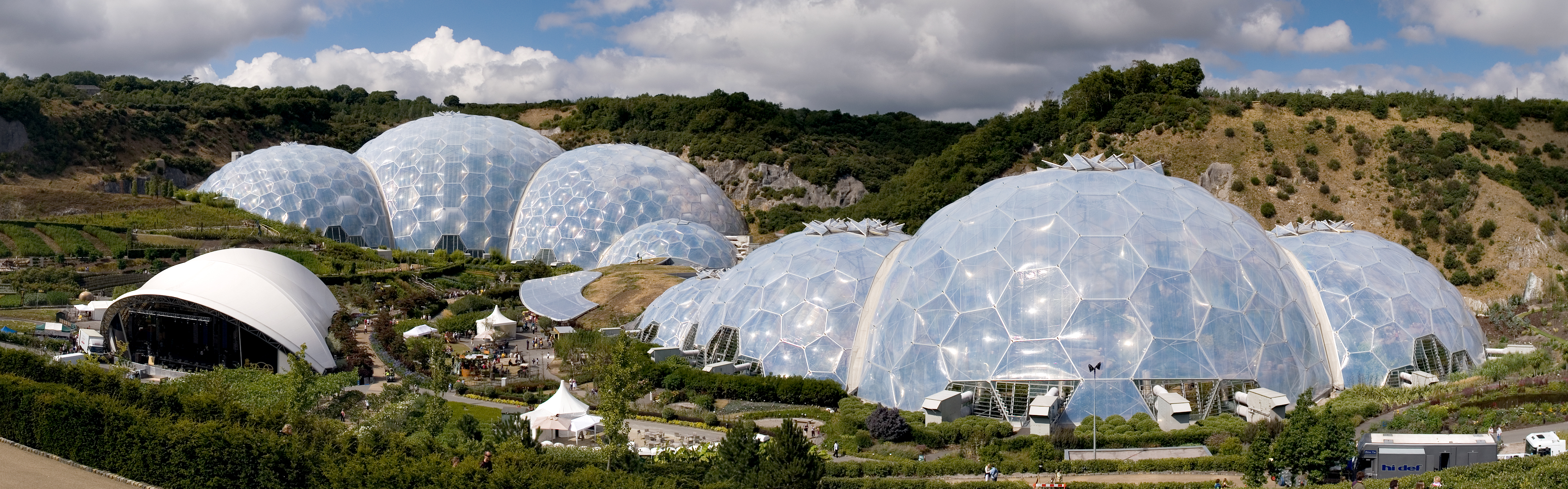
Buckminster Fuller - American designer

Buckminster Fuller and the Geodesic dome.


File:Eden Project geodesic domes panorama.jpg
available at: Jurgen Maten/12 August 2006/Geodesic dome
/http://en.wikipedia.org/wiki/Buckminster_Fuller/15/12/2013


Buckminster Fuller an American born in July 12, 1895 was a systems theorist, architect, engineer, author, designer, inventor and futurist.

A series of conflicts in his life led to many inventions on paper and development into 3D structures and the invention of the 4D design.
The first conflict was his being born into an aristocratic family and being one in a line of graduates from Harvard University, he failed to graduate from Harvard University.

The second major conflict came about after he was c by his leaving the navy in 1922 and co-founding Stochade Building Company, which produced lightweight building materials, the knowledge gained during these years proved invaluable to his later experiments with design and archeology.  In 1927 disaster struck to this company with consiquence that Fuller lost job, came bankrupt, living in public low-incoming housing in Chicago Illinois.

The third conflict was when his young daughter Alexandra died from complications from Polio and Spinal meningitis.  This felt him feeling responsible for her death, and led him to heavy drinking and contemplating suicide.

He recovered from these psycological conflicts by taking a decision to devote his life to others, embarking on experiments to discover and challenge himself.  He was a peniless unknown individual who wanted to see what he could be able to do effectively for humanity, mostly in the field of construction.

The first work as a result of these was inventing of a 4D design by building 4D tower - lightweight, prefabricated, multistorey apartments to be delivered anywhere by airship.  It could generate it's own light, heat and independent sewage disposal system - self sustainable concept (Futuristic at that time) this 4D concept was thought in future concept and not a 3D design where it only thought about immediate personal gain.  This reality is being experienced nowadays, where construction concepts cannot be just about design, but have to consider the needs of others and the environment.

available at: http://en.wikipedia.org/wiki/Buckminster_Fuller[Accessed 2 January 2013]

Thursday, 13 December 2012

Caravaggio - The ciaroschuro artist

Caravaggio, in his work, had a continual conflict between what was termed 'vulgar realism'and the expectations of the person or body who comissioned the work.

An example of this is the painting of St Matthew.

Caravaggio's first painting of St Matthew was rejected.  In this first painting he presented the saint as a bald peasant, with dirty legs and attended by a lightly clad, over familiar boy angel.
The church did not accept this and he redid-it.

The first painting was realism as Caravaggio knew it, since it was not the first time he found himself in a situation of poverty.

Caravaggio realism for which he became renounced showed up as early as his apprenticeship with Giuseppe Cesare, where his paintings showed physical particularity.

Caravaggio never resolved this conflict, since his art, more often than not reflected his life, and so his paintings show violent struggles, grotesque decapitations, torture and death, and only when the original paintings were rejected did he consent to repaint in a more idealistic style, "the stylised formality and grandeur"of Roman Mannerism.


available at: http://www.caravaggio-foundation.org/[Accessed 22nd December 2012]